
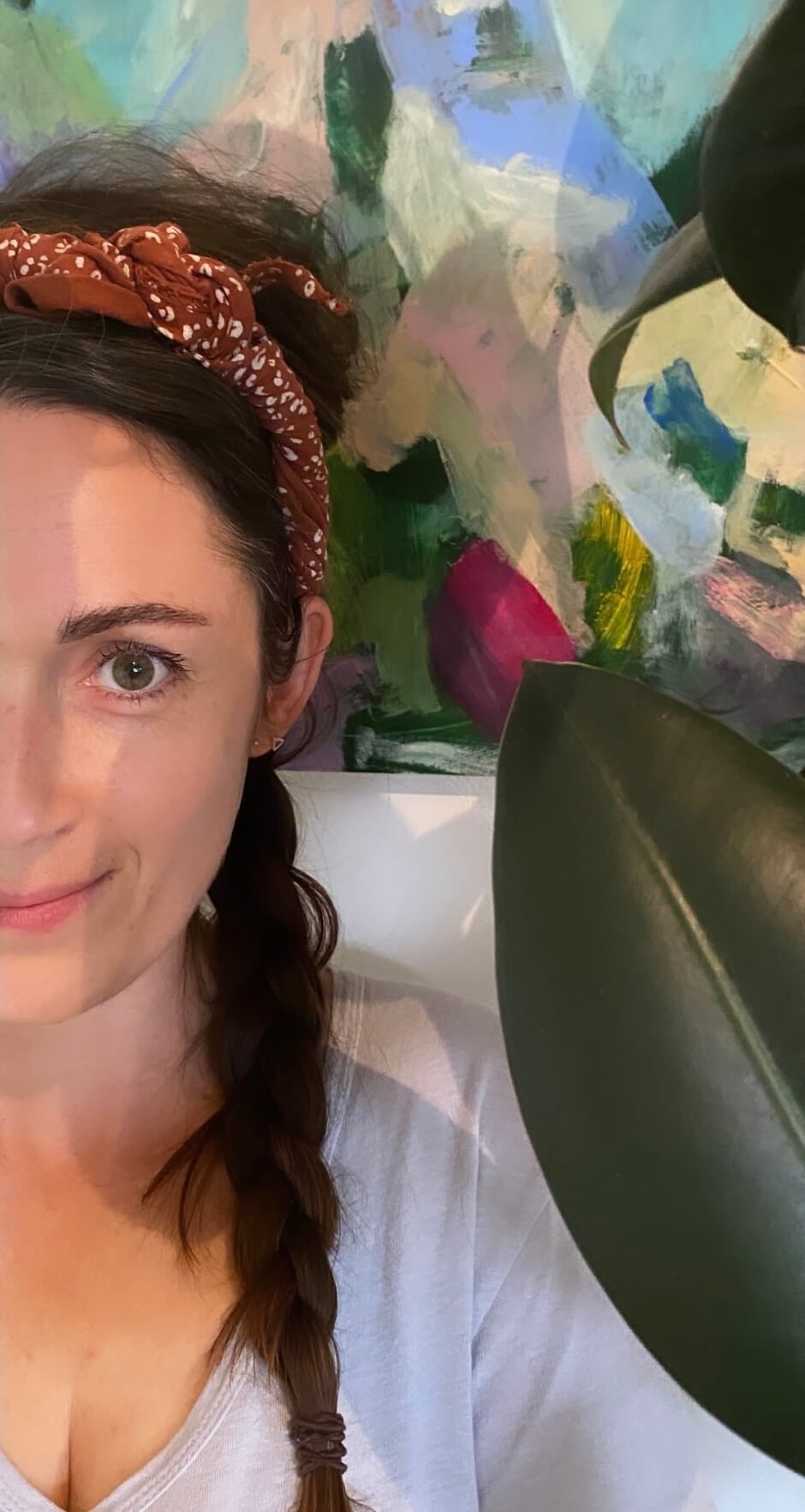
Artist Amanda Ferguson.
Amanda Ferguson
Amanda Ferguson is an artist based in Bendigo in the Victorian Goldfields.
Described as 'rich with knowing' and 'gentle but powerful', Amanda’s works often blend abstract elements and representational forms.
“During my BA I studied art history and cinema studies with a focus on the representation of landscape in contemporary Australian film. I have since taken further courses in screen printing, textile print design and hand built ceramics, and am a self taught painter,” she says.
“I work in schools, youth justice and the disability sector, so I know how powerful art and making can be as tools to re-engage young people with education and support literacy development. But art is also for me an incredibly important tool for self care. In the same way that some people describe only being able to switch off their minds while running, painting is my most reliable meditative practice.”
“Because my work with young people requires precision, specificity and highly detailed risk management, I appreciate having the freedom to embrace ambiguity in abstract painting. I am constantly inspired by nature, botanical shapes, and the contradictions present in the fragility but also enduring nature of flowers and seeds.”
“Painting has made me a great ‘noticer’, searching for and storing in my mind the examples of beauty all around me, every day.”
Amanda’s work is held in homes in Australia, Italy, India and Slovenia.
Follow on Instagram.


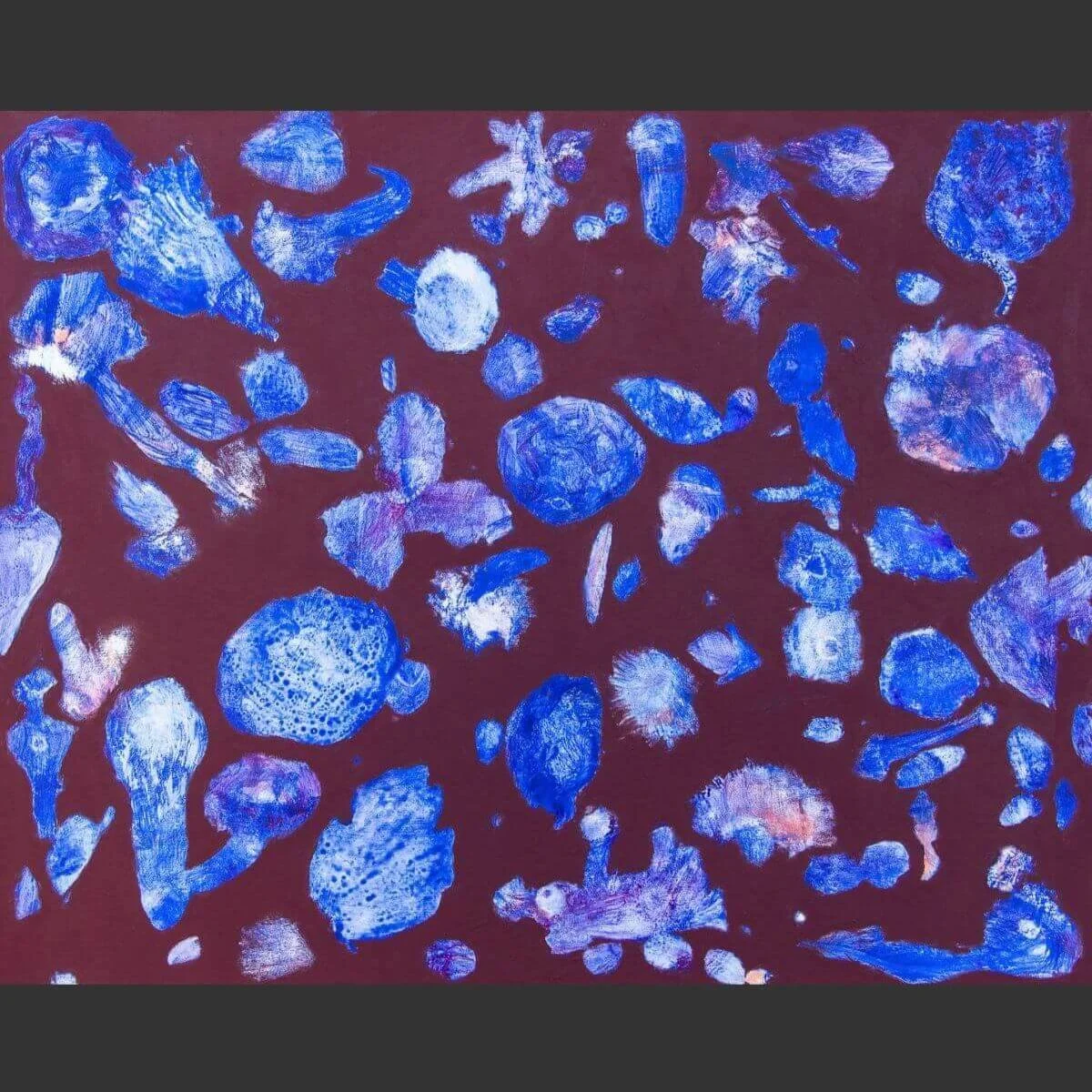
22cm x 22cm | Acrylic on aluminium composite panel | American Ash float frame.
This superb work is part of the latest group show at Tyger, ‘I am trying to break your heart’.
Amanda says, “This piece belongs to a series I have been working on, centred on archeological flowers, buds and seeds. We think of flowers as fragile and their beauty fleeting - and our valuing of them is based in part on this. However, archeologists have found imprints and charred remains of flowers and herbs from such places as inside the handle of an axe, woven together under decomposed bodies, and beneath the remains of ceremonial bonfires. These flowers, from more than 2000 years ago, disrupt our perception of the botanical world and remind us that even fragile things can be stronger and more enduring than we imagine.”
“In this piece I worked with a reduced colour palette, to keep the focus on shape and the creation of texture. I enjoyed giving myself a challenge by beginning with shades of purple - a colour I don’t typically use or gravitate to.”